Our CEO once lived in Brazil for work. The drink he had there more than any other was guaraná. Recently, a wave of saudade (a Portuguese word for a deep, nostalgic longing) got the better of him, and he ordered some on Amazon. But when the cans arrived and he took a closer look, he noticed something unexpected. This is the story of that guaraná.
The front and back of the can tell different stories
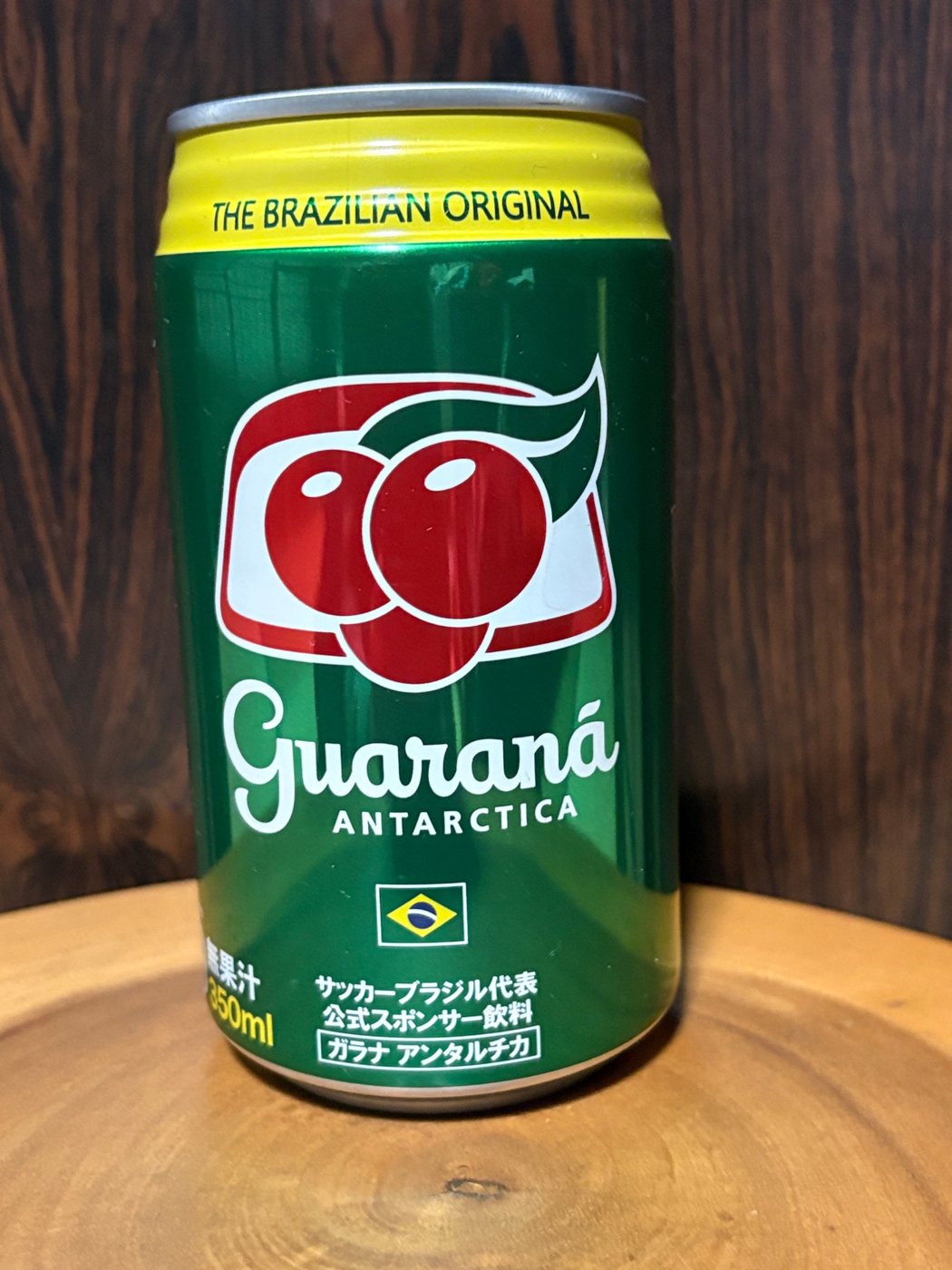
A green can, freshly delivered from Amazon, sits on my table at home. Guaraná Antarctica. Brazil’s national soft drink.
The yellow band around the top proudly reads “THE BRAZILIAN ORIGINAL.” The original, from Brazil. Nice.
Casually, I turn the can around and look at the back.
“国産” — Japanese for “made in Japan.”
…Made in Japan?
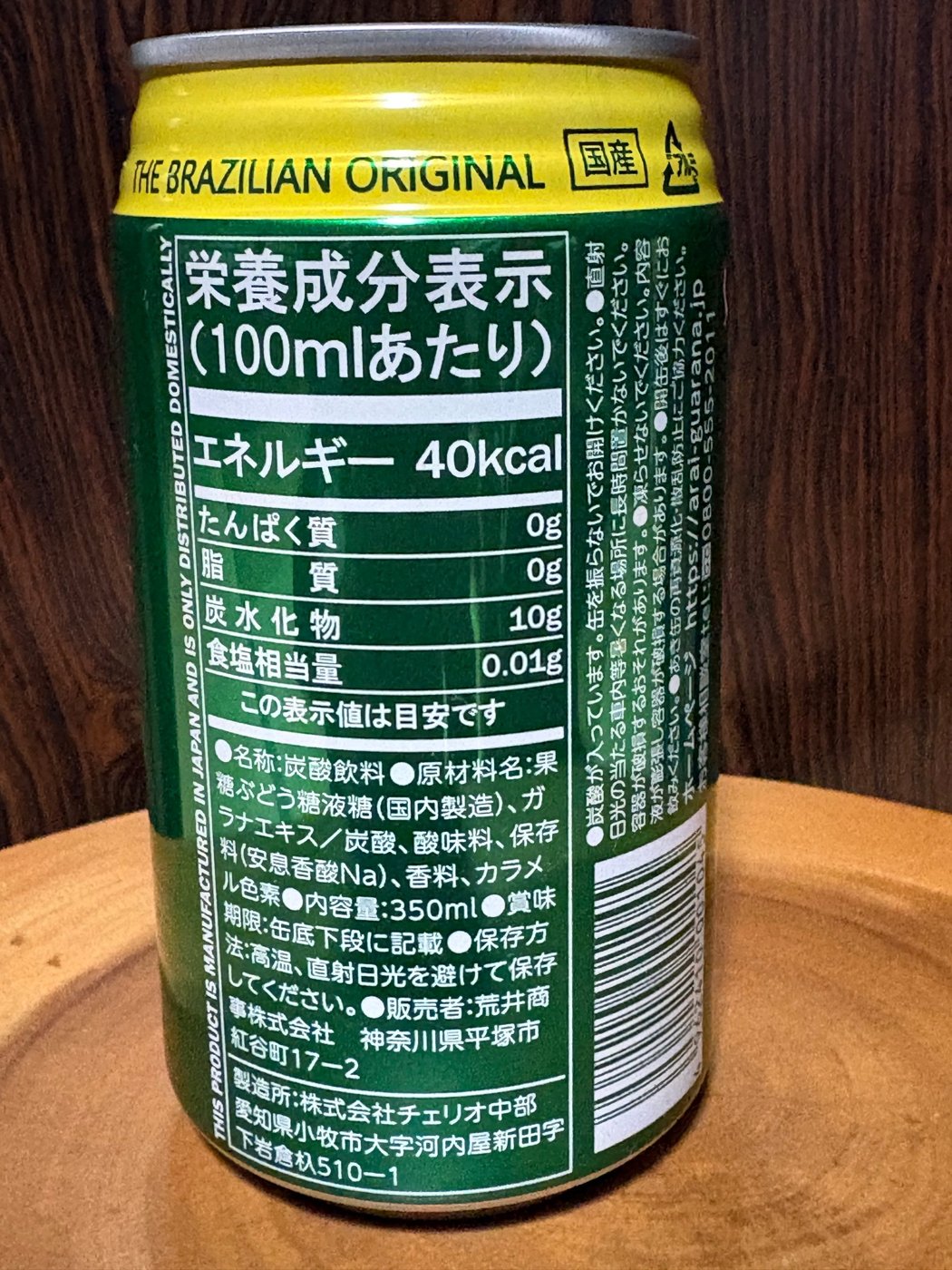
Front again: THE BRAZILIAN ORIGINAL. Back again: made in Japan. Manufacturer: Cheerio Chubu Co., Ltd. Komaki City, Aichi Prefecture.
The Brazilian original was born in Komaki, Aichi.
Running up the side in small English letters: “THIS PRODUCT IS MANUFACTURED IN JAPAN AND IS ONLY DISTRIBUTED DOMESTICALLY.” Made in Japan, sold only in Japan.
In other words, this can will never set foot on Brazilian soil.
So what is guaraná, anyway?
Guaraná is a plant native to the Amazon basin. It bears red fruit when ripe. Those round, eyeball-like shapes in the logo on the can? That’s the fruit.
And those “eyeballs” are not just a design choice.
The first people to cultivate guaraná were the Sateré-Mawé, an Indigenous people of the Amazon, who call it waraná. According to their origin story, the first guaraná sprouted from the eye of a child who had died and was buried in the earth, and from that plant came the first Sateré-Mawé person.
The earliest written record of guaraná dates to 1669. According to Guaraná Antarctica’s official website, a priest traveling the upper Amazon described how the Mawé people crushed the fruit in a gourd and drank it, and could hunt all day without feeling hungry.
The traditional way of preparing it is bold, too. The guaraná is formed into hardened sticks, then grated on the hard, rough tongue of the pirarucu, a giant freshwater fish, and dissolved in water. No cheese grater required.
Guaraná Antarctica, made from this fruit, was launched in Brazil in 1921. It has more than 100 years of history and is the official sponsor drink of Brazil’s national football team. It says so right on the can.
According to the official website, the recipe created in 1921 is still a secret, “kept under seven locks.” The brand began sponsoring the national team at the 2002 World Cup, held in Japan and Korea. That year, Brazil won its fifth title. In the website’s own words: “Coincidence? I don’t think so.” Quite the confidence.
So Brazil won a tournament held in Japan with guaraná on its back. And that guaraná is canned in Japan. Fate, it seems, is usually printed on the back of the can.
I imagine it hasn’t changed, but when I lived in Brazil, guaraná showed up everywhere, from children’s birthday parties to dinners among adults. It’s the kind of drink you can have at a party when you’d rather skip alcohol, and nobody bats an eye.
If I had to compare it to something in Japan, it’s like the barley tea at a school sports day, the ramune soda at a summer festival, and the oolong tea at a year-end office party, all rolled into one. An all-rounder.
The guaraná I used to drink in Brazil
When I lived in Brazil for work, supermarkets had an entire shelf for guaraná. Not one kind — brand after brand, lined up side by side.
Of all of them, the one that stood out most was Antarctica.
I tried the others too. To be honest, they didn’t quite suit me. It’s like drinking a cola that isn’t Coca-Cola. Not bad. But something’s different.
Still, I really liked guaraná and drank it often. At any Brazilian churrasco (barbecue), there’s almost always a bottle on the table. Meat, meat, meat, guaraná. In that order. The sweetness surprised me at first, but before I knew it, I was used to it.
Surely some Brazilians living in Japan are thinking, “I want that.” Good news: guaraná, made from a fruit born in the Amazon, can now be bought on Amazon. That’s actually how I bought this can. Import food stores such as KALDI usually carry it as well.
Apparently, you can even get it from vending machines now. According to the Japanese official website, Guaraná Antarctica has been rolling out to vending machines across Japan since 2025. You can search for stores and vending machines by region on the official “Where to Buy” page (in Japanese). Items sometimes sell out, so it’s a good idea to check with the store before you go.
If you’re thinking “Estou com muita saudade!” (I miss Brazil so much!), go and look for one. We can’t set up a churrasco for you, but the vending machine has guaraná.
Why is “the Brazilian original” made in Japan?
The answer was on the back of the can: “Seller: Arai Shoji Co., Ltd.,” a company based in Hiratsuka, Kanagawa Prefecture.
From the late 1970s, the company sent employees to Brazil to look for business partners. In 1980, its president at the time met the first person of Japanese descent to become a judge on the São Paulo Court of Justice. Through that connection, he was introduced to a former vice president of Antarctica and obtained exclusive rights to sell guaraná concentrate in Japan and Southeast Asia.
In other words, what arrives from Brazil is not cans but concentrate. The raw material is imported, and the drink is canned in Japan. Exclusive sales in Japan began in 1981 and have continued for more than 40 years. A meeting with a judge led to a soft drink. You never know where a connection will take you.
But the story doesn’t end there. Japan has another guaraná.
In Hokkaido. In the late 1950s, small and mid-sized beverage makers across Japan, alarmed by Coca-Cola’s arrival in the Japanese market, joined forces to create a drink that could compete. The result, launched in 1960, was a Japanese-made guaraná called Co-up Guarana.
For its 60th anniversary, new words were added to its label:
“THE JAPAN BRAND.”
…Let’s recap.
- The guaraná born in Brazil is made in Japan and calls itself “THE BRAZILIAN ORIGINAL.”
- The guaraná born in Japan is made in Hokkaido and calls itself “THE JAPAN BRAND.”
Both claim to be the real thing. And both are made in Japan.
Born in Komaki — and where does it go?
That the factory is in Aichi Prefecture feels almost too perfect to be a coincidence.
Aichi is one of the prefectures in Japan with the most Brazilian residents. Brazilians make up 22.2% of its foreign residents, about three times the national average of 7.2% (as of the end of 2019).
Across Japan, there are about 210,000 Brazilian nationals (210,014 as of the end of 2025). The president of Arai Shoji has said that for Japanese-Brazilians living in Japan, this guaraná is indispensable.
The taste of the Amazon, canned in Komaki, is lined up on store shelves in Toyota, in Hamamatsu, and in my own neighborhood. A can that never returns to Brazil has become a “taste of home” for people who left Brazil.
Born in Brazil, living in Japan
Looking at the can, a thought occurs to me. This isn’t just a story about guaraná.
Born in Brazil, living in Japan — many of our clients fit that description too. What’s inside may still taste like the Amazon, but home is now Japan. And Japan has its own rules.
At Oitomares, we offer consultations in Portuguese and English about life in Japan.
If saudade hits you in Japan, start by checking the vending machine nearby. What’s inside tastes like the Amazon.